
The Hidden Cost of Technical Debt for Scaling Startups
The shortcuts that helped you launch could be the very thing slowing your startup down today.
 By Zetflix Product Team11 min readUpdated 2026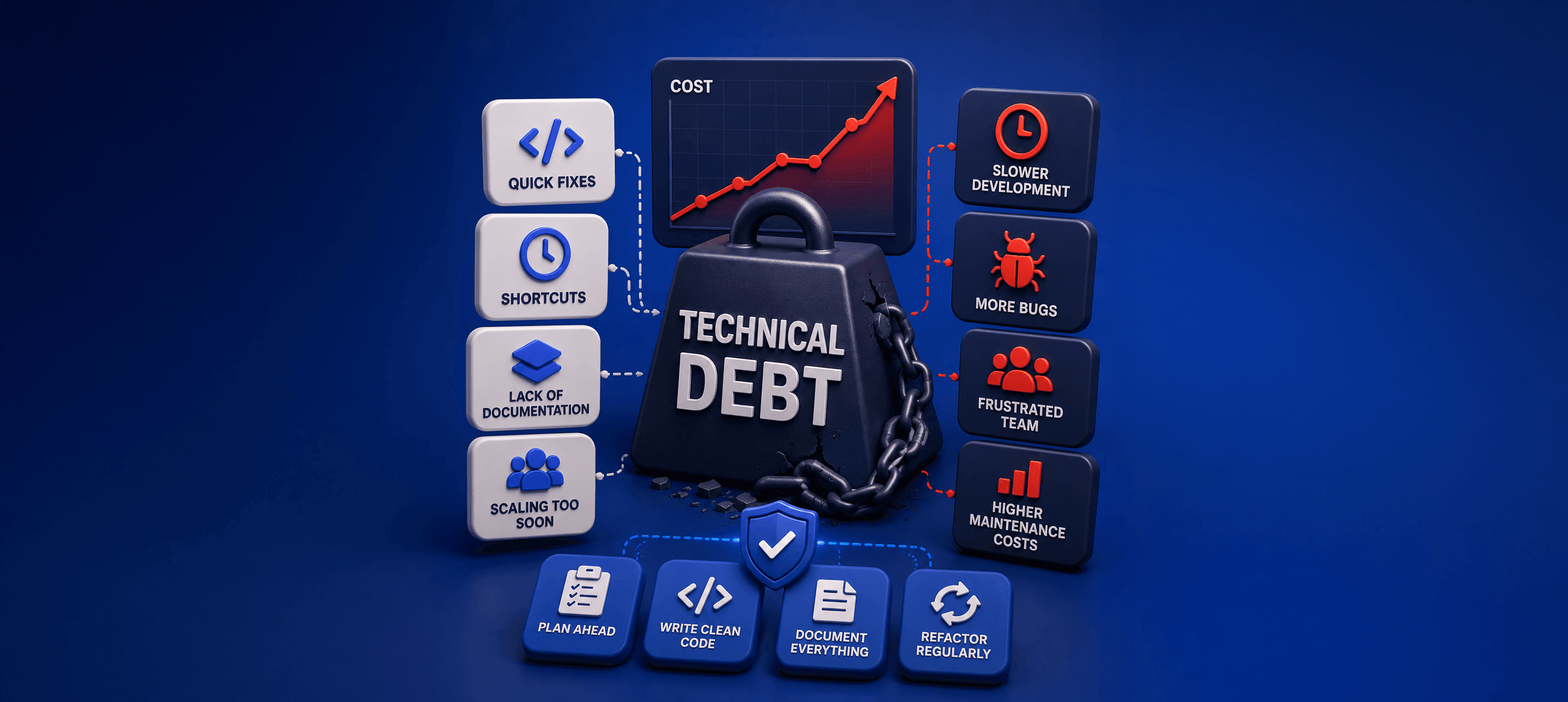
Introduction
Every growing startup carries some technical debt. That's normal.
The teams that scale successfully aren't the ones with perfect codebases. They're the ones that keep improving while they build, making small fixes before small problems become expensive ones.
Technical debt isn't something to fear but something to manage. Because the sooner you deal with it, the more time your team gets to spend building the future instead of untangling the past.
What Technical Debt Actually Is
Technical debt isn't simply "bad code." It's the gap between the product you've built and the one your business now needs to keep growing.
It builds up every time you choose a quick solution over a long-term one. Maybe you copied existing code instead of creating a reusable component, postponed a refactor until "later," or rushed a feature to meet an important deadline.
None of these decisions are necessarily wrong. In fact, they're often what helps startups move fast. The real issue isn't taking on technical debt; it's forgetting it's there.
Why It's Invisible Until It's Expensive
Technical debt rarely causes problems overnight.
Your app works, customers are happy, and new features continue to launch. Everything seems to be running smoothly.
Then, one day, a feature that should take two days suddenly takes two weeks. Simple updates become risky, bugs appear in unexpected places, and your team spends more time understanding old code than writing new code.
That's how technical debt shows up. It doesn't stop progress but slowly makes every step forward more difficult.
The Signs Are Already There
If your team avoids touching certain parts of the codebase, if estimates keep slipping, or if the same bugs keep returning, technical debt may already be affecting your product.
Another common sign is onboarding. When new developers need weeks just to understand how the system works, complexity has likely started getting in the way.
On their own, these issues seem manageable. Together, they create a product that's much harder to scale than it needs to be.
Good Debt vs Bad Debt
Not all technical debt is bad.
Sometimes choosing the faster solution is exactly the right business decision. Releasing a feature quickly to validate an idea often matters more than building the perfect architecture.
The difference is intention. Good technical debt is documented and planned. Everyone knows why the shortcut was taken and when it should be revisited.
Bad technical debt grows quietly. Temporary fixes become permanent, documentation disappears, and eventually no one knows why the system works the way it does.
The goal isn't eliminating technical debt, it's keeping it visible and manageable.
When Should You Pay It Down?
You don't need to stop everything and rebuild your product from scratch.
Instead, pay attention to where your team keeps getting stuck. If the same part of the product slows every release, creates repeated bugs, or makes new features harder to build, that's usually where your effort will have the biggest impact.
Small improvements made consistently are almost always more valuable than a massive rewrite.
Preventing Debt Without Slowing Down
Every growing startup carries some technical debt. That's normal.
The teams that scale successfully aren't the ones with perfect codebases. They're the ones that keep improving while they build, making small fixes before small problems become expensive ones.
Technical debt isn't something to fear but something to manage. Because the sooner you deal with it, the more time your team gets to spend building the future instead of untangling the past.
Articles you might like




Ready to Launch Your MVP?
Stop reading and start building. Our team is ready to turn your vision into a viable product.