
Native vs Cross-Platform: Choosing Your Mobile Stack in 2026
The right choice isn't about following trends - it's about building the best product for your goals.
 By Zetflix Product Team10 min readUpdated 2026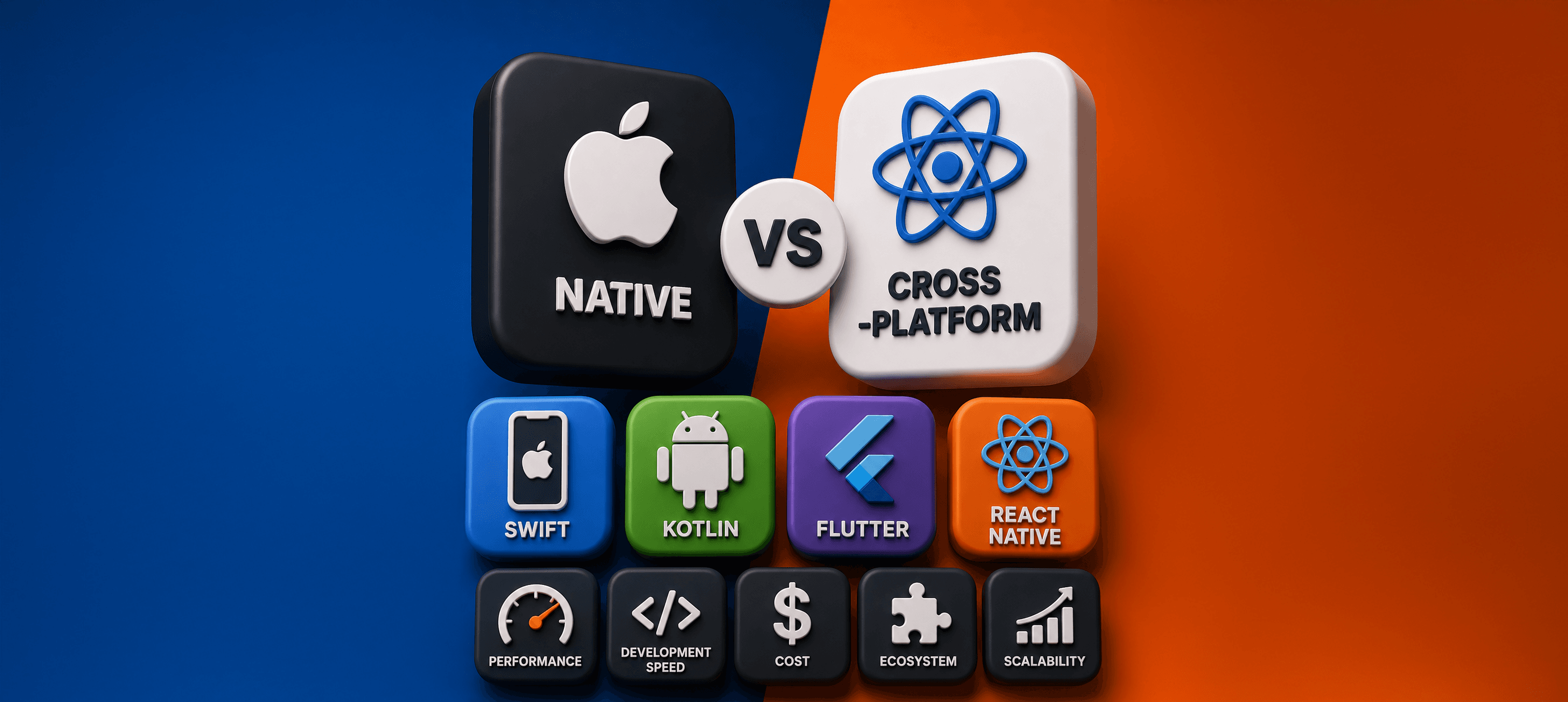
Introduction
One of the biggest decisions you'll make before development begins is whether to build your app natively or use a cross-platform framework. You'll find plenty of opinions online, but the truth is there's no universal winner.
The right choice depends on your budget, timeline, and the kind of experience you want to deliver.
It's a Business Decision, Not Just a Technical One
Founders often think this is a conversation only developers need to have, but your choice affects much more than the code.
It influences how quickly you can launch, how much development will cost, and how easy it is to maintain your app as it grows.
Instead of asking "Which technology is better?", ask "Which one helps us reach our goals faster?"
What Native Development Offers
Native apps are built separately for iOS and Android using each platform's own programming language.
The biggest advantage is performance. Native apps feel incredibly smooth, work seamlessly with device features like the camera or sensors, and get immediate access to the latest operating system updates.
The trade-off is that you're maintaining two codebases instead of one, which usually means more time and a larger budget.
Need help building your MVP?
Stop guessing. Get a technical roadmap from experienced builders.
Where Cross-Platform Wins
Cross-platform frameworks like Flutter and React Native let developers build one app that runs on both iOS and Android.
For many startups, that's a huge advantage. Development is often faster, maintenance is simpler, and launching on both platforms becomes much more affordable.
Today's cross-platform tools are also far more capable than they were a few years ago. For most business apps, users won't notice the difference.
Not sure which path fits your product?
We've shipped both. Get a straight recommendation based on your actual roadmap.
The 2026 State of the Tools
A few years ago, choosing cross-platform often meant compromising on quality. Today, that's no longer the case.
Frameworks like Flutter and React Native have evolved significantly, delivering smooth performance and a user experience that's more than enough for most business apps. At the same time, native development has also become faster and more efficient than ever.
The gap between the two is much smaller than it used to be. That's why the best choice depends less on the technology itself and more on what your product actually needs.
A Simple Way to Decide
If your app relies on top-tier performance, advanced animations, or deep integration with device hardware, native development is usually the better fit.
If your priority is launching quickly, keeping costs under control, and maintaining one shared codebase, cross-platform is often the smarter choice.
And if you're still validating your idea, starting with cross-platform is usually a safe bet. It lets you get your product into users' hands faster, and if you ever need native functionality later, you can always add it where it matters most.
Our Recommendation
For early-stage startups, we usually recommend cross-platform. It helps teams launch faster, gather feedback, and validate their product without doubling development effort.
As your product grows, your needs may change. Rather than rebuilding the entire app, many successful companies gradually introduce native features only where they add real value.
In the end, the best mobile apps aren't defined by the technology behind them, they're defined by the experience they deliver to users.
Articles you might like

Ready to Launch Your MVP?
Stop reading and start building. Our team is ready to turn your vision into a viable product.