
How to Build an MVP in 2026
Build smarter, launch faster: why does every startup need an MVP?
 By Zetflix Product Team12 min readUpdated 2026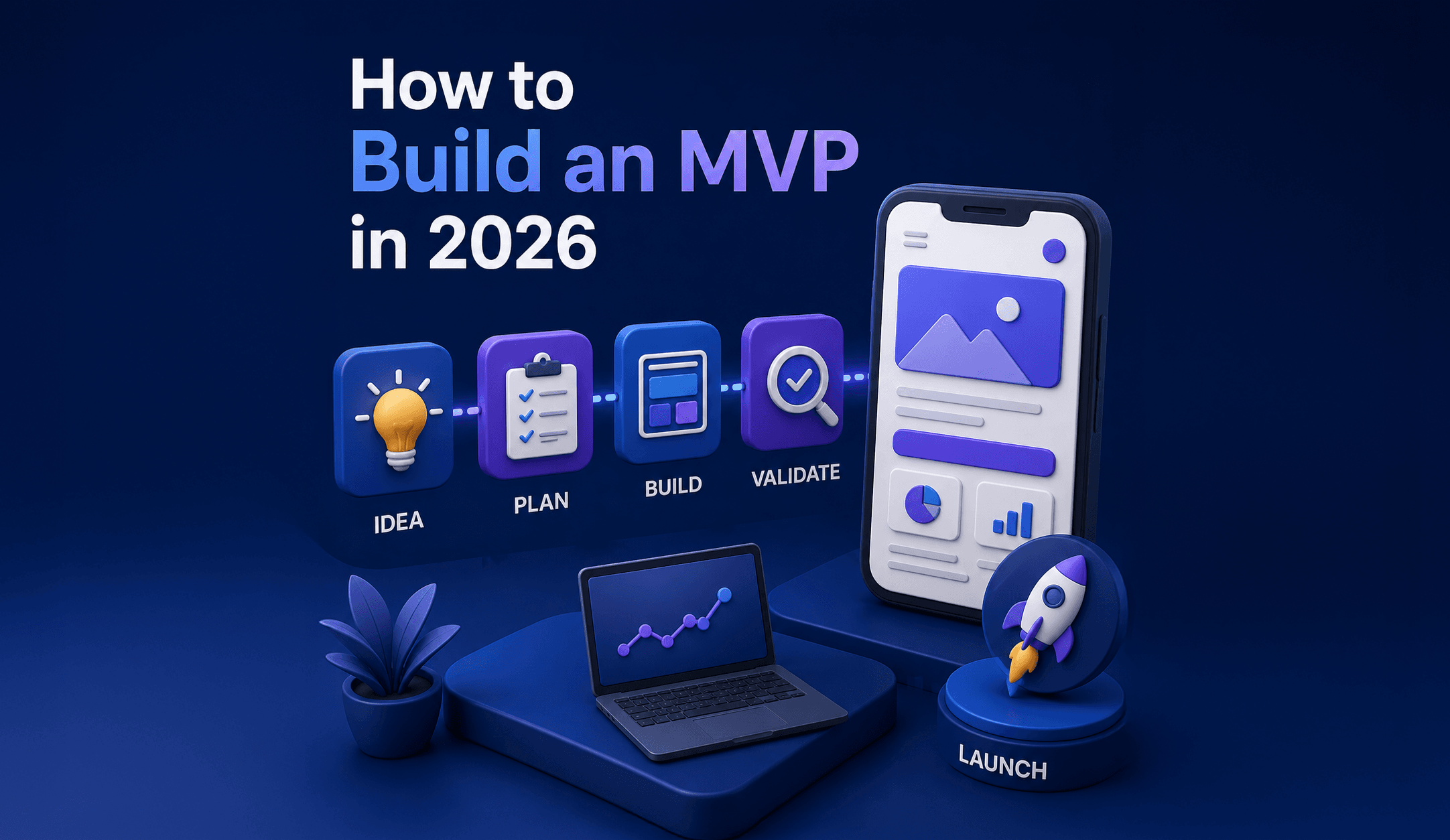
Introduction
Every startup begins with the same excitement. You have an idea you're convinced people will love. New features keep coming to mind. The design gets more polished. The roadmap gets longer.
Then six months pass. The product still isn't live. Sound familiar?
It's one of the biggest reasons startups waste time and budget before they've even spoken to a real customer. The longer you wait to launch, the longer you're relying on assumptions instead of feedback.
That's exactly why the MVP exists.
What Is an MVP?
An MVP (Minimum Viable Product) isn't a "cheap" version of your product.
It's the smartest version. Instead of trying to build everything at once, you focus on the one problem your product is meant to solve and build just enough to solve it well.
The goal isn't perfection. The goal is learning.
One of the most famous startup stories proves this perfectly. Before Dropbox became the company we know today, there wasn't even a working product. The founders simply released a short video explaining how it would work.
People loved the idea. That single video validated demand before months of engineering work ever began.
Today, many founders talk about building a Minimum Lovable Product (MLP) instead of just a Minimum Viable Product. The principle hasn't changed - keep it simple, but make the experience good enough that people genuinely enjoy using it.
The Mistakes That Slow Startups Down
Building an MVP sounds simple. In practice, it's surprisingly difficult because founders naturally want to build more.
We've seen the same patterns appear again and again.
Building for Success You Haven't Reached Yet.
Many startups spend months preparing for hundreds of thousands of users before they've found their first hundred.
Complex architecture, advanced infrastructure, and endless planning feel productive, but they rarely help you validate your idea any faster.
Build for where your product is today not where you hope it'll be in three years.
Forgetting What "Viable" Means
Simple doesn't mean unfinished. An MVP should still deliver a smooth experience and solve a real problem.
If users leave because the product feels broken, you won't know whether your idea failed or whether your execution did.
Waiting for "Just One More Feature"
This might be the most common startup trap of all: "Let's add this before launch."
Then another feature appears. Then another.
Weeks become months, and launch day keeps moving further away. Meanwhile, your future users still haven't had a chance to tell you what actually matters.
Need help building your MVP?
Stop guessing. Get a technical roadmap from experienced builders.
The Best MVP Strategy in 2026
Not long ago, the advice was simple: build it, launch it, and hope people come.
Today, the smartest founders take a different approach.
Before investing months in development, they validate the idea first. That could mean creating a landing page, building a simple no-code prototype, or even talking directly to potential customers. The goal is to find out if people actually want the product before committing to building it.
How Much Does an MVP Cost?
The honest answer is that it depends on what you're building.
A simple no-code prototype may cost just a few thousand dollars, while a custom-built SaaS platform with advanced functionality can require a much larger investment.
The more important question isn't how much you spend - it's when you spend it.
The smartest founders invest small while they're validating the idea and scale their investment only after they know there's real demand. It's much easier to justify building more once you know people actually want what you're creating.
How Long Should an MVP Take?
An MVP isn't meant to take a year to build.
For most startups, a well-planned custom MVP can be designed, developed, and launched within 8 to 12 weeks.
If your timeline keeps growing beyond three months, it's often a sign that your product has become too ambitious. Rather than delaying your launch, consider simplifying the scope and focusing on the features users need most.
Remember, the goal of an MVP isn't to build everything, it's to start learning as quickly as possible.
Choosing the Right Development Team
The people building your product are just as important as the product itself.
Whether you work with freelancers, hire an in-house team, or partner with an agency, choose people who understand the realities of building a startup. They should be comfortable moving quickly, adapting to change, and focusing on what matters most instead of trying to build everything at once.
The best teams won't just follow instructions, they'll ask questions, challenge unnecessary features, and help you make smarter decisions along the way.
Articles you might like

Ready to Launch Your MVP?
Stop reading and start building. Our team is ready to turn your vision into a viable product.